
Can Mosquitoes Bite Through a Hammock? What My Nano-7 Taught Me
By Mike Rittenhouse
Affiliate disclosure: Wanderlust Hammocks may earn a commission when you buy through links on this page.
Yes—mosquitoes can reach you through some lightweight hammock fabrics. I learned that using my Grand Trunk Nano-7: covering myself with a foil bivy and wearing a head net still left me getting bitten through the ultralight hammock fabric. That failure led me to make an enclosing bugnet.
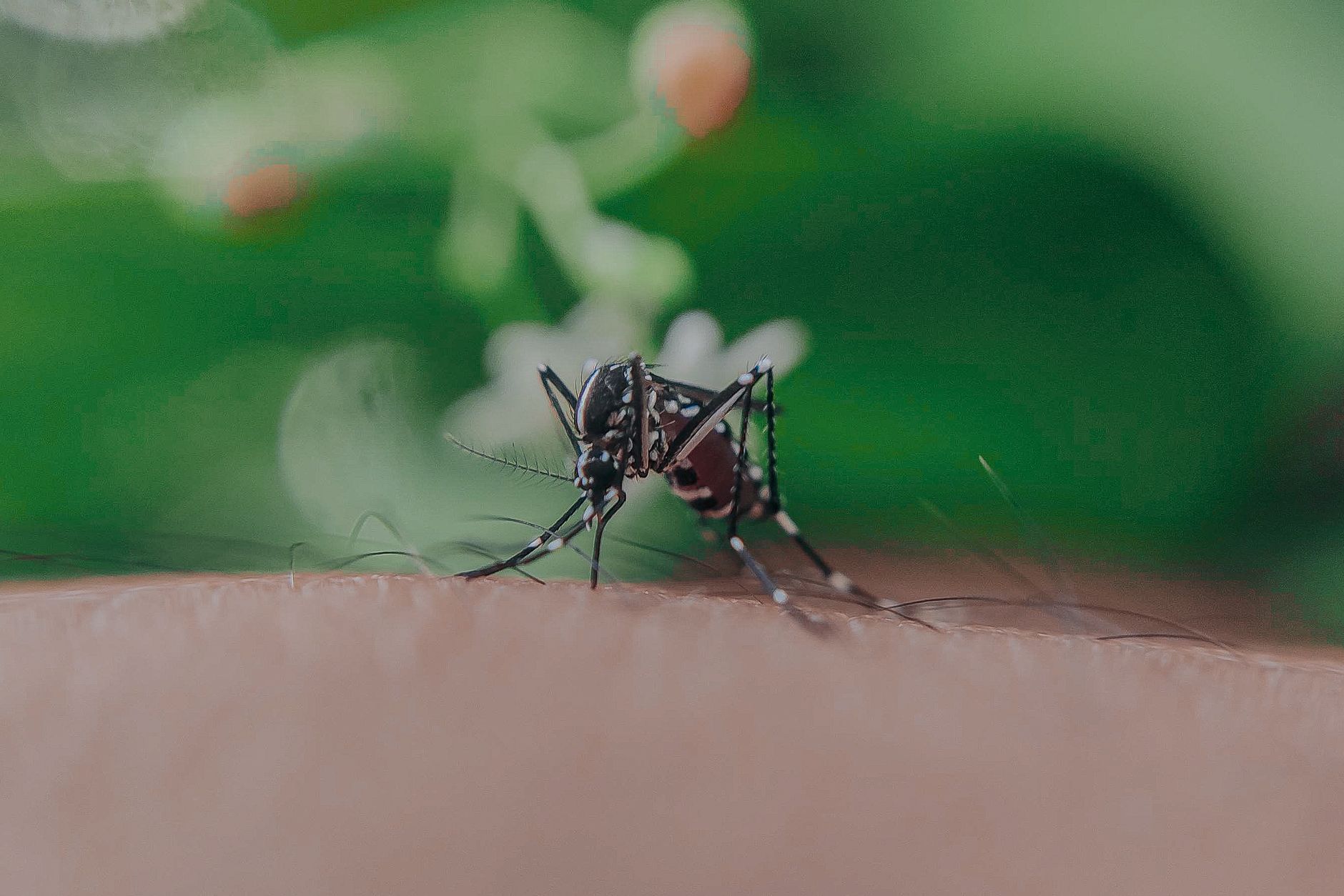
For hammock camping in Florida, stopping mosquito bites is only part of a comfortable night. I also want the breeze to reach me, a view through the net, and coverage that stays complete when I settle into the hammock. My homemade “shark cage” taught me how those needs can pull against each other.
Why can I still get bitten with a hammock bug net?
A net above your face and a net surrounding the whole hammock solve different problems. Before buying anything, inspect your existing setup while it is hung normally:
| What you find | What to check next |
|---|---|
| The net covers the opening above you, but the hammock's underside is exposed | Look for a compatible enclosure that also surrounds the underside. An integrated top net does not itself establish protection below the hammock. |
| You already have a surrounding net | Inspect its closures, end openings and mesh for gaps or damage. Check its position with someone lying in the hammock. |
| Netting rests against exposed skin | Adjust the net according to its instructions to create clearance. The CDC warns that mosquitoes can bite through net openings when someone sleeps directly against the mesh. |
| You cannot tell whether the enclosure fits your hammock | Check the net maker's compatibility information before ordering. A product photograph is not a fit test. |
This is a setup check, not a way to identify the cause of every bite. Bites may happen before you get inside, and an enclosing net still needs to be intact and correctly closed.
What I changed after the bites
I made my first “shark cage” from black curtain sheers. My camping buddy Karlos gave it that name. In my use, the material kept the bugs out wherever it covered the hammock. Unfortunately, that included keeping out the breeze.
The tight weave was also difficult to see through at certain angles. I had made an insect barrier, but I had given up some of the airflow and view that make a hammock appealing in the first place.
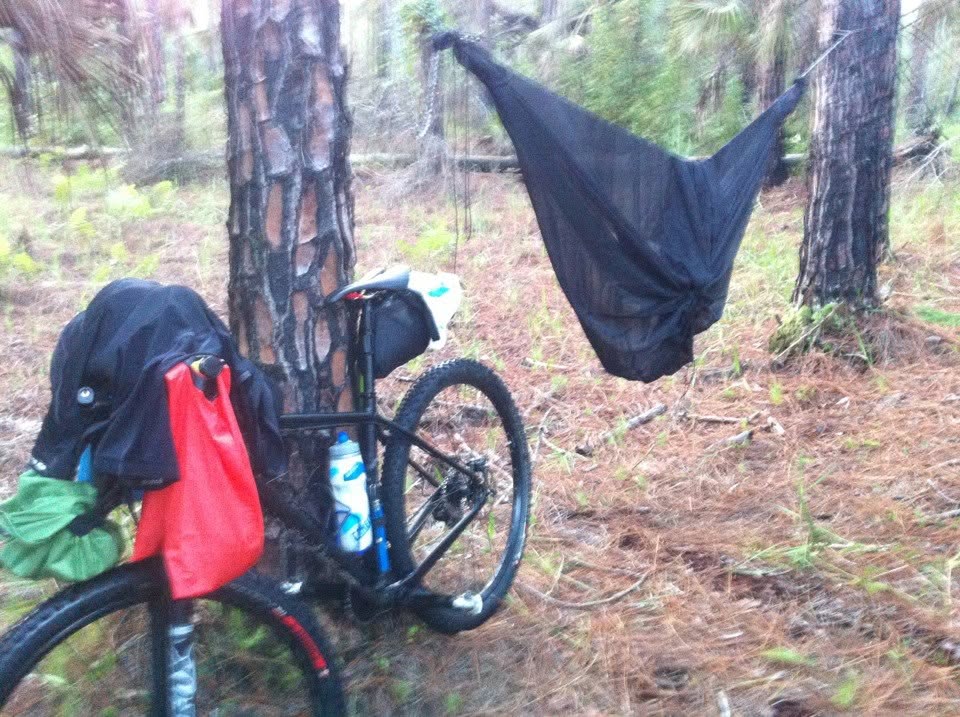
The 12-inch gap underneath me
My construction had another flaw: about 12 inches were left uncovered beneath my backside. That was a coverage problem separate from how well the curtain material stopped insects. Good material cannot protect an area it does not cover.
That is why I would check a net with someone lying in the hammock, not just admire its shape while the hammock is empty. Look underneath, check the ends and closures, and see whether the enclosure still covers the occupied hammock.
Close the gaps around the rigging. The points where suspension or rigging lines enter and exit the net should have cinch closures that snug down around the lines. Leaving those openings loose gives crawling insects, including ants and spiders, a route into the enclosure. Check both ends with the hammock occupied.
Where my later build went
My last build used an enclosing, zippered arrangement similar to the commercial options available today. I would look for that surrounding coverage again, but I would also pay attention to the breeze and the view. Enclosing the hammock is only one part of making the night comfortable.
My long-term Nano-7 ownership review contains the original photograph and the wider comfort and overnight-use limits. A small hammock body alone was never my complete shelter.
What about Florida no-see-ums?
Mosquito protection is not the whole insect question in Florida. University of Florida IFAS guidance distinguishes no-see-um screening from ordinary screening: the openings need to be small enough to exclude biting midges. For a hammock purchase, I would look for an explicit no-see-um protection specification rather than assume that a product called a “mosquito net” answers both needs.
Mesh, airflow and the view
I want a purpose-made net to balance insect protection with airflow and the view. My curtain sheers showed me why those comfort checks matter. Look for accounts of use in hot, humid conditions and photographs looking out from inside the net. A straight-on photograph from outside would not have revealed my angle-dependent visibility problem.
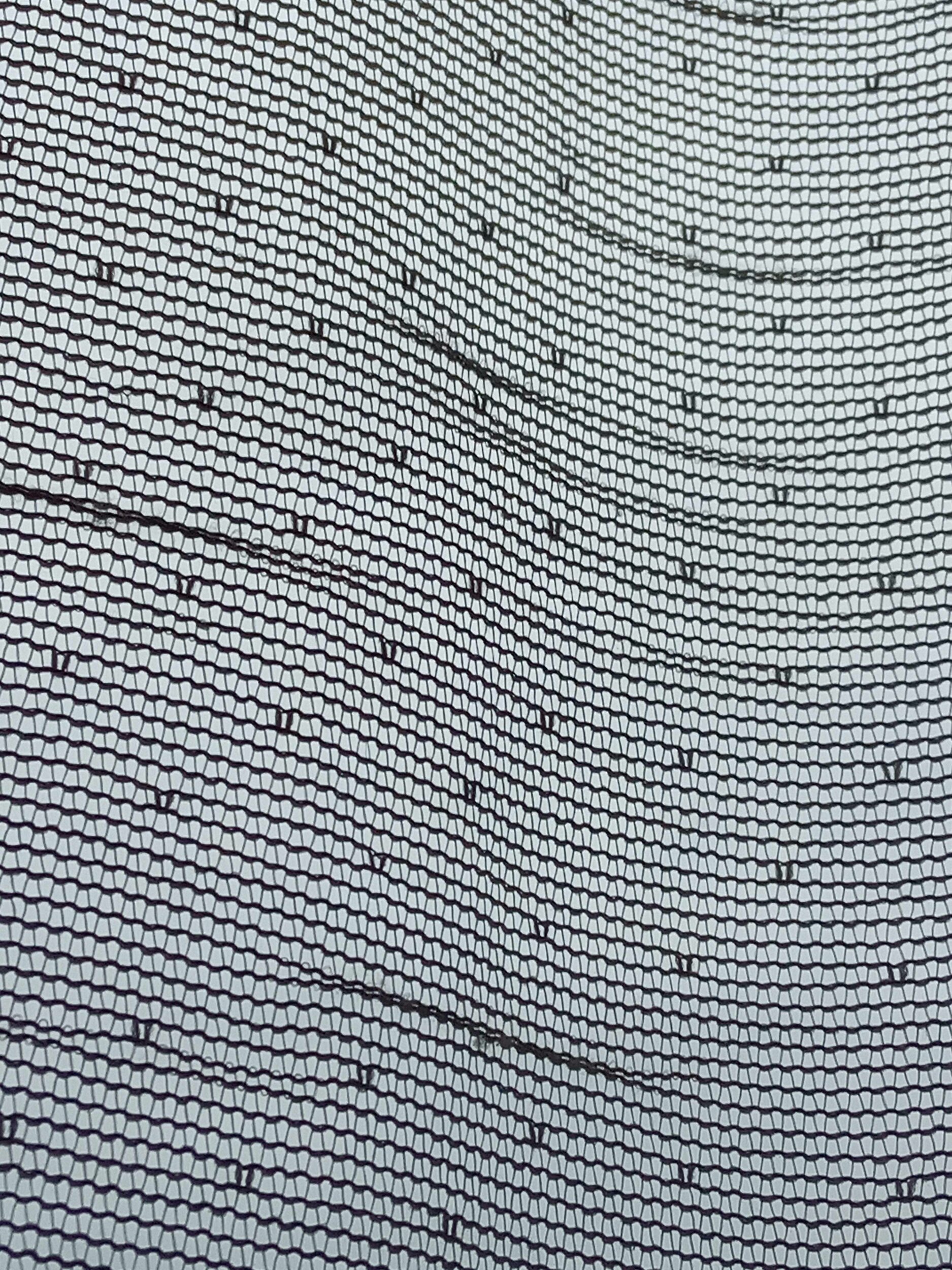
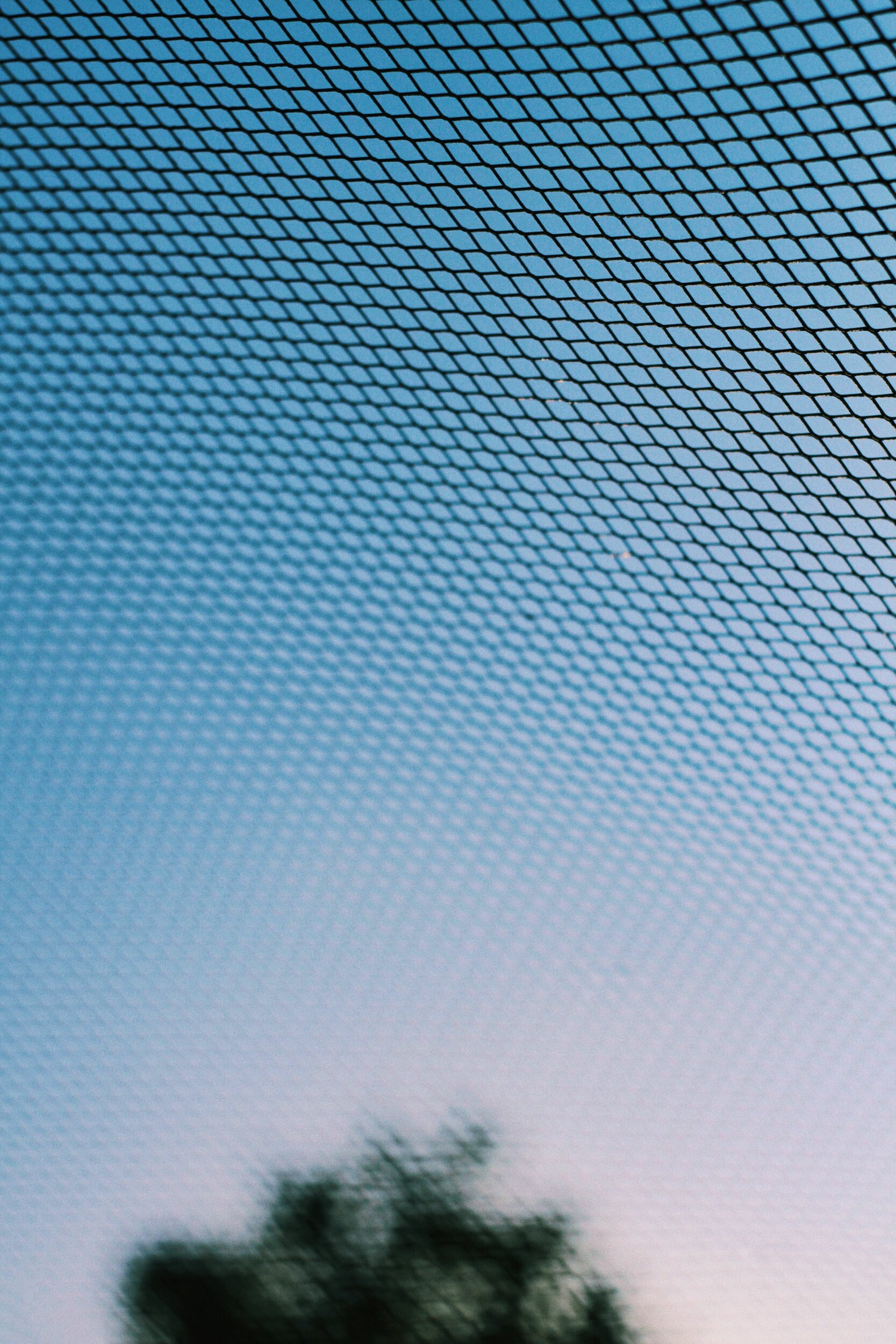
More open mesh can favor airflow and the view, while smaller openings matter when tiny biting insects are part of the problem. These photographs illustrate different mesh textures; they are not shown at a common scale. For a purchase, check the actual net’s stated insect protection and compatibility rather than choosing by how open its weave looks in a photograph. In Florida, I would check no-see-um protection separately from mosquito protection.
What to check before buying an enclosing net
These are the questions I would use to narrow the choices before comparing price and packed weight:
- Insects: Does the maker specify protection against the insects you expect, including no-see-ums where relevant?
- Coverage: Does the enclosure surround the occupied hammock, including underneath, without an uncovered section like the one in my first build?
- Airflow: What do credible accounts of use in hot, humid conditions say about ventilation? An empty-net product photo cannot tell you how much breeze you will feel.
- View: Can you find photographs looking out from inside, rather than only looking at the net from outside?
- Fit and access: Does it suit your hammock, stay clear of exposed skin, and let you enter, exit and close it properly?
How to check fit and access before buying
- Match the hammock: Identify your hammock model and length, then check the net maker’s compatible models and setup instructions. Do not use packed dimensions as the space available around an occupied hammock.
- Allow for your whole setup: Check room for your lying position and any underquilt, while keeping netting clear of exposed skin. A net that fits an empty hammock still needs an occupied coverage check.
- Check the way in and out: Compare zippered access with sleeve or bottom-entry designs. Make sure you can enter, exit and fully close the opening, including the points around the suspension lines. If access uses a zipper, check that you can reach it from inside.
One researched example is the ENO Guardian DX, which ENO describes as a surrounding enclosure with two doors and a spreader bar to reduce mesh contact. ENO lists its weight as 13 ounces. It is a candidate to compare, not something I have tested on my Nano-7. ENO lists compatibility with its hammocks except the Sky-series, DayLoft and SuperNest. That does not establish a Nano-7 fit guarantee.
You can inspect the Guardian DX listing at Wanderlust Hammocks. Confirm compatibility with the manufacturer and the seller's current details before purchasing. If your current enclosure already fits and the problem is a gap or its position, fix that first.
My Etrol: an integrated net still needs a plan underneath
My Etrol has integrated bug netting above the hammock body. Its taffeta body is thicker than my Nano-7’s fabric, but I still plan for protection underneath. In my use, the setup works when I sleep in clothing or use an underquilt. I do not treat a thicker hammock body and a top net as a reason to stop thinking about where insects can reach me.
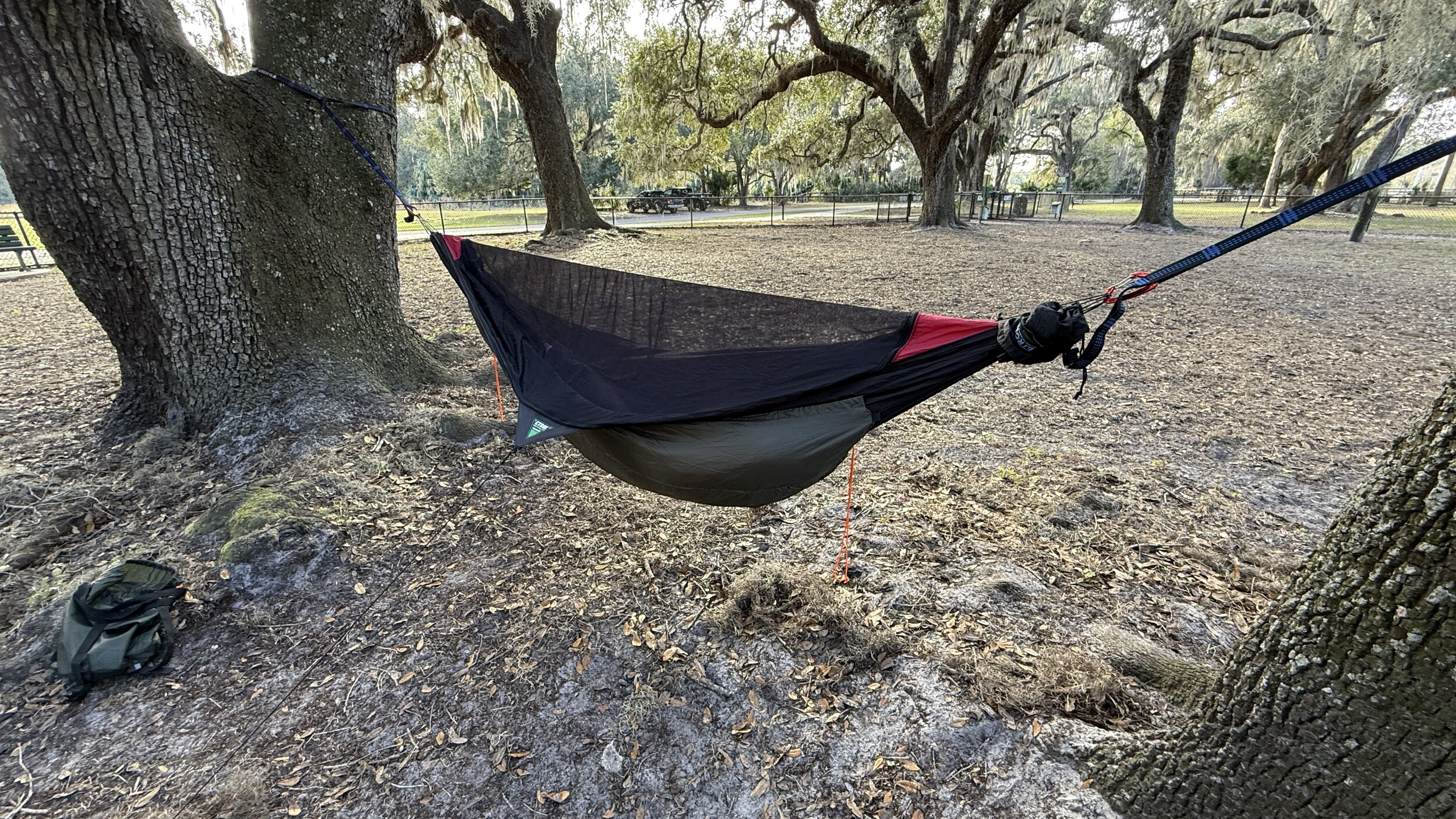
That is a different arrangement from a separate net that encloses the hammock above and below. When comparing the two, look at the whole occupied setup: the net, the hammock fabric, what you will wear or use underneath, and any gaps around the suspension.
Does a double layer hammock prevent bites from underneath?
Layer count alone is not a mosquito-protection specification. A single layer or double layers describe the hammock’s construction; check what the manufacturer says about insect protection for that particular model. Do not assume a second fabric layer removes the need to check coverage underneath and around the occupied hammock.
Does a sleeping pad or underquilt replace a bug net?
Clothing or an underquilt is part of what makes my Etrol setup work for me, but I would not assume every pad or underquilt seals every route insects can use. An underquilt also has an insulation job to do. Choose it for the conditions, then check insect coverage separately across the whole setup.
Does permethrin replace a hammock bug net?
Treat fabric treatment as an additional option, not a way to close gaps in an enclosure. The CDC says permethrin-treated clothing and camping gear can help prevent mosquito bites. Before treating hammock fabric or netting, check the treatment label and the gear maker’s guidance. Permethrin products for clothing and gear must not be applied directly to skin.
My curtain-sheer experiment gave me four things to judge a net by: insect protection, complete coverage, airflow and the view. The material stopped bugs where it covered me, but it also stopped the breeze, restricted the view at some angles, and my construction left a gap underneath. Those are the tradeoffs I would want explained before buying another enclosure.
Sources
- University of Florida IFAS: Biting Midges, No-See-Ums—why biting-midge screening needs openings small enough to exclude these insects.
- CDC: About Mosquito Nets—net condition and avoiding direct skin contact; general bed-net guidance, not hammock-model testing.
- CDC: About Permethrin-Treated Clothing and Gear—label-directed fabric treatment and the distinction from skin-applied products.
- ENO Guardian DX at Wanderlust Hammocks—product details and buying options. Manufacturer specifications and compatibility limitations checked October 28, 2026.