
Affiliate disclosure: Wanderlust Hammocks may earn a commission when you buy through links on this page. It does not change what you pay, and it does not change what we say. A commission is never worth sending someone into the woods with the wrong shelter.
There is no single “best camping hammock.” The best camping hammocks of 2026 solve different problems: a seven-ounce model can be brilliant in a lightweight backpacking or bikepacking kit and a poor first choice for someone who expects a bug net, rain protection, and suspension in one bag. A roomy double can be excellent for lounging but still need several separate components before it becomes a dependable overnight shelter.
So this guide starts with the trip, not the marketing label.
I began hammock camping around 2010 while looking for a compact sleep system for bikepacking in Florida. My first setup paired a Grand Trunk Nano 7 with a secondhand Hennessy tarp, DIY tree straps, a homemade bug net, and a DIY ridgeline. My first night sleeping completely alone in the woods came during an early CFITT attempt in Ocala National Forest: November, about 38°F, and 1 a.m. That experience taught me something a spec sheet cannot—the hammock body is only one part of the sleep system.
The Short Answer: Our Best Camping Hammock Picks
| Best for | Our pick | What comes with it | Published weight | Our evidence |
|---|---|---|---|---|
| Ultralight minimalists | Grand Trunk Nano 7 | Hammock, stuff sack, two wiregate carabiners; straps sold separately | 7.3 oz | Owned and used |
| Budget beginners | Sunyear 2 Person Hammock Tent | Hammock, integrated net, straps, carabiners, net lines, bag | 2.7 lb listed package weight | Researched comparison |
| Roomy lounging and flexible camping | ENO DoubleNest | Hammock, stuff sack, carabiners; straps sold separately | 19 oz | Researched comparison |
| Taller campers wanting an integrated shelter | Hennessy Explorer Ultralite Zip XL | Hammock, bug net, rainfly, suspension ropes, tree straps, stuff sack | 2 lb 4 oz, plus 3 oz webbing straps | Research + longtime Hennessy-owner input |
| Premium modular comfort | Warbonnet Blackbird XLC | Hammock, removable bug net, shelf, stuff sack; suspension depends on selection | 19–29 oz before suspension, depending on fabric | Researched benchmark |
Published specifications can change. Confirm dimensions, capacity, included components, and availability on the seller’s page before buying.
How We Chose—and What We Have Not Tested
Trust is more useful than a wall of five-star verdicts. We separate the evidence behind every recommendation:
- Owned and used means Michael owns the hammock and has direct experience with it.
- Owned and modified means the hammock is part of a real budget-upgrade project. Any conclusions will come after the work and an actual hang, not before.
- Researched comparison means the recommendation is based on manufacturer specifications, system completeness, design, and the needs of a specific camper. It is not presented as a field test.
- Research + longtime owner input means published specifications are supplemented by relevant experience from someone who used that brand or system for years. It still is not presented as Michael’s field test of the specific model.
That distinction matters. We have not slept in every hammock on this list, and we will not pretend otherwise. The goal is to help you narrow the field, understand the tradeoffs, and avoid buying a hammock body when you thought you were buying a complete shelter.
Best Lightweight Backpacking Hammock: Grand Trunk Nano 7
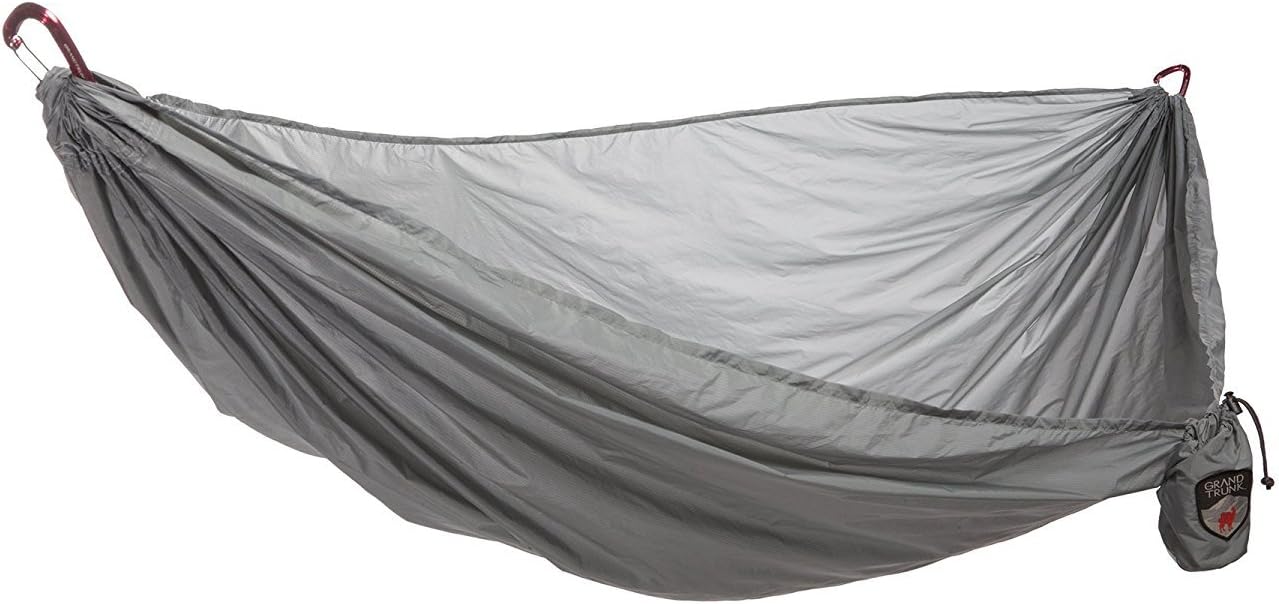
Best for: Ultralight backpacking, bikepacking, fastpacking, day trips, and experienced campers who want to build a very light modular system.
The Nano 7 is the most personal recommendation here because it is the model that began my own hammock-camping journey. Grand Trunk publishes a weight of 7.3 ounces, a 9-by-4-foot body, a 300-pound capacity, and ripstop nylon construction. It includes two ultralight wiregate clips, but suspension is separate.
Why it earns a place
The Nano 7 disappears into a small pack. For a bikepacker counting both ounces and storage volume, that matters. It also leaves you free to select your own suspension, tarp, bug protection, and insulation instead of carrying an all-in-one package chosen by someone else.
The tradeoff
At nine feet long and four feet wide, this is a deliberately compact hammock—not the roomy 11-foot platform many dedicated hammock sleepers prefer for a flatter diagonal lay. It is also not a complete shelter. In Florida, I would not treat it as an overnight system without a plan for insects, rain, suspension, and bottom insulation.
Bottom line: Choose the Nano 7 when low weight and a modular kit are the point. Skip it if you want one bag containing everything needed for a first overnight hang.
Best Budget Hammock Tent for Beginners: Sunyear 2 Person
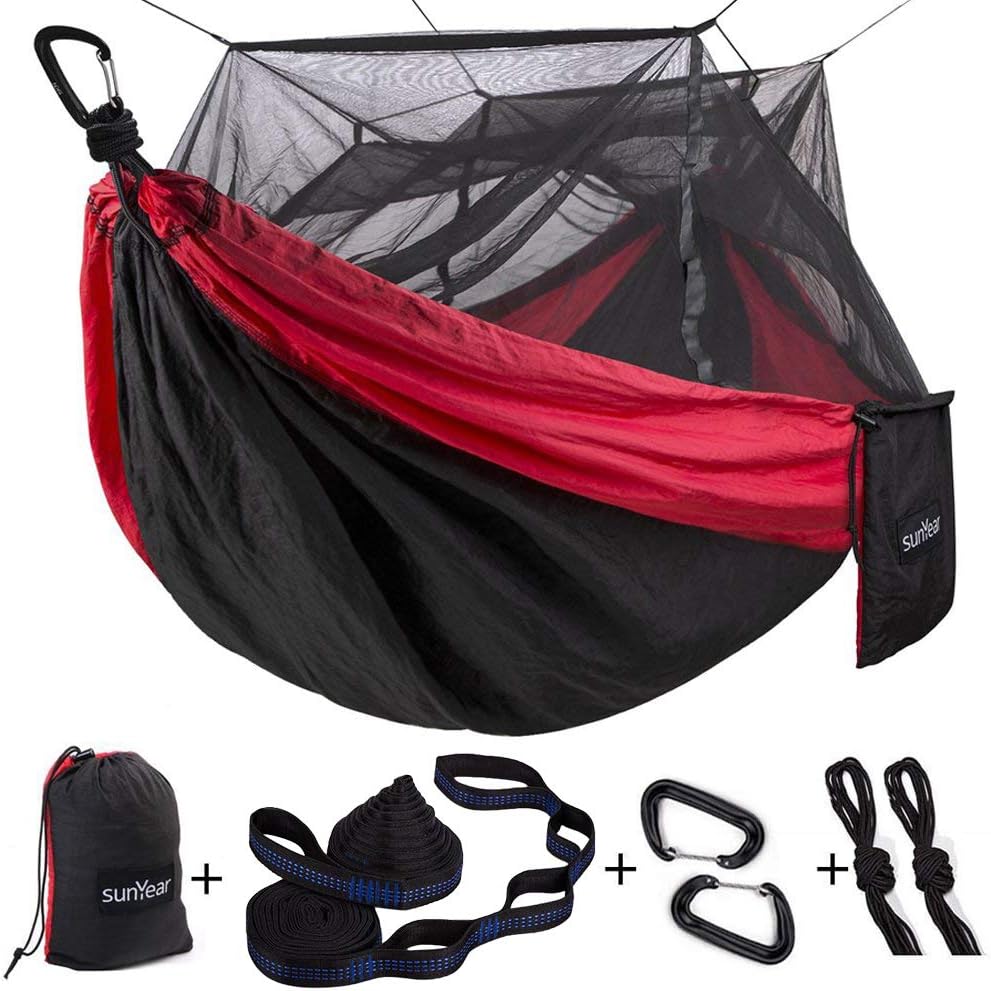
Best for: Beginners, car camping, and short backpacking trips where included bug protection and suspension matter more than minimum weight.
The Sunyear package solves a common beginner problem: the product listing includes the bed, integrated mosquito net, two ten-foot suspension straps, connectors, net lines, and a carrying bag. The listed double size is 118 by 78 inches, with a 2.7-pound package weight.
That makes it much heavier than the Nano 7, but the comparison is not apples to apples. The Sunyear listing describes a kit; the Nano 7 is a hammock body with carabiners.
Why it earns a place
It reduces the number of immediate decisions. A new camper can learn the basics of tree selection, strap placement, sag, and diagonal sleeping before deciding whether premium suspension or a lighter modular system is worth the cost.
The tradeoff
The bug net is fixed, the package is not ultralight, and a rain tarp and insulation still need to be considered. “Two person” also describes capacity and width better than sleeping comfort. Two adults in one gathered-end hammock usually roll toward the same low point; most overnight campers will be more comfortable in separate hammocks.
Bottom line: This is a low-cost on-ramp, not the final word in backpacking hammocks. It makes sense when budget and included hardware matter more than shaving ounces.
See the Sunyear hammock package
Best Hammock for Camping and Lounging: ENO DoubleNest
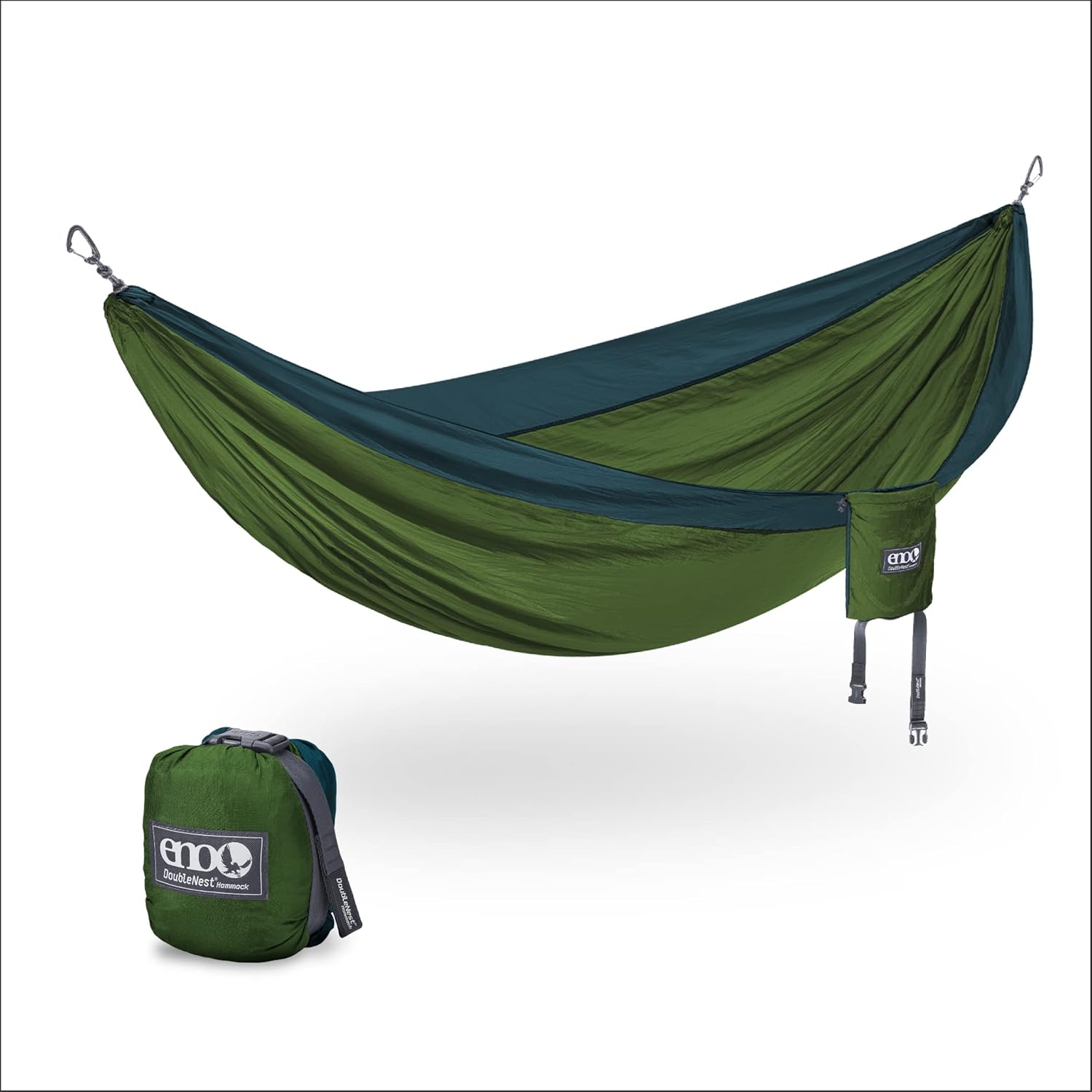
Best for: Campers who value width, durability, and easy lounging and do not mind choosing shelter components separately.
ENO lists the current DoubleNest at 9 feet 6 inches long, 6 feet 4 inches wide, 19 ounces, and a 400-pound capacity. It includes connectors and an integrated stuff sack. ENO suspension straps are sold separately.
Why it earns a place
The generous width gives a solo user room to find a diagonal position, and the 70-denier fabric favors durability over extreme weight savings. ENO also offers a large ecosystem of compatible straps, tarps, bug nets, organizers, and insulation.
The tradeoff
The DoubleNest is not a ready-to-camp shelter by itself. Add the weight and cost of straps, rain protection, bug protection, and insulation before comparing it with an integrated system. Its 9.5-foot length is also shorter than the 11-foot bodies many dedicated hammock campers favor.
Bottom line: Buy it as a roomy, durable hammock and the center of a modular setup—not because the word “Double” promises a comfortable two-person night.
Best Backpacking Hammock Tent for Taller Campers: Hennessy Explorer Ultralite Zip XL
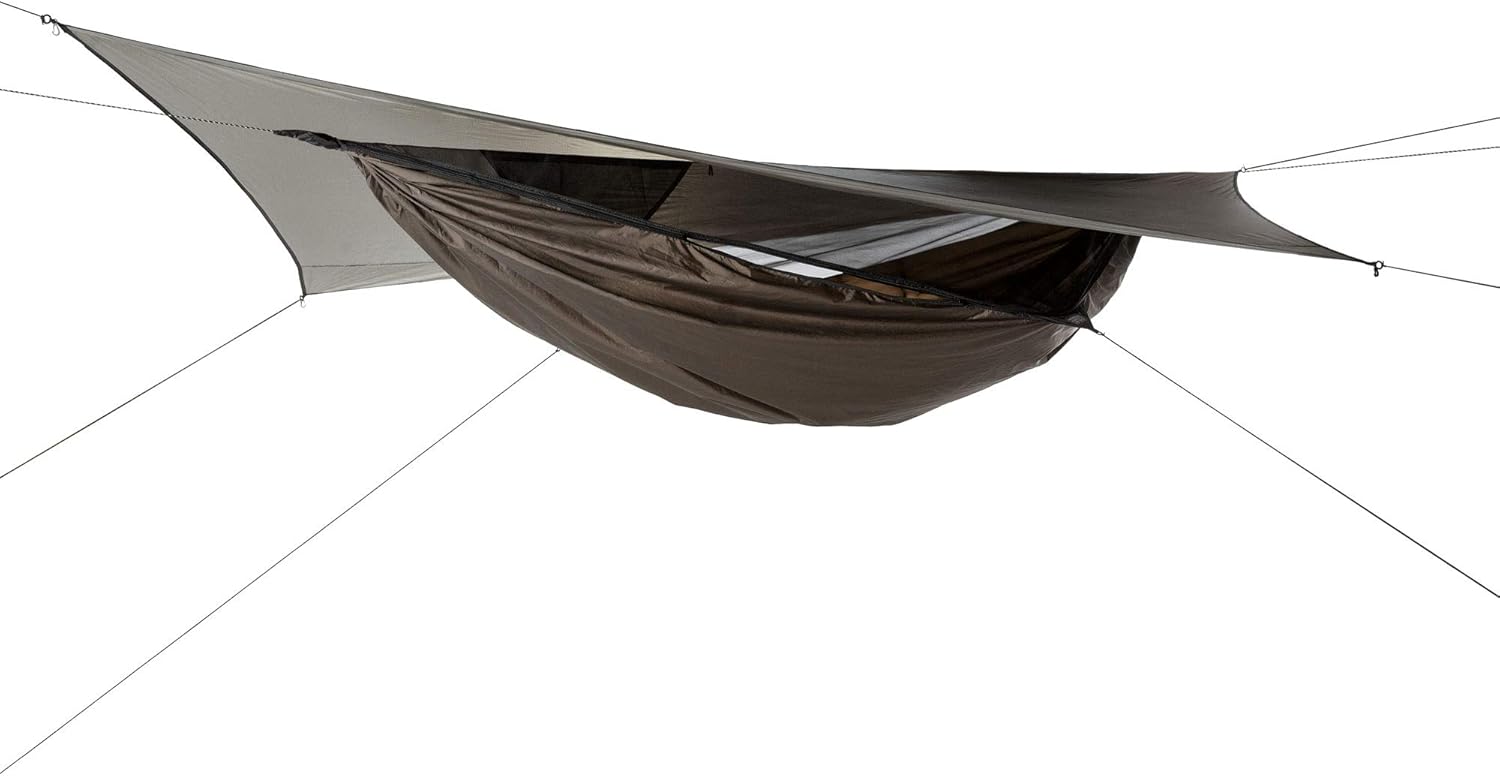
Best for: Taller or larger backpackers who want the net, fly, suspension, and sleeping platform designed as one system.
Hennessy specifies the Explorer Ultralite Zip XL for users up to seven feet tall and 250 pounds. The published package includes an asymmetrical hammock body, structural ridgeline, attached mosquito netting, detachable rainfly, suspension ropes, complimentary tree-protecting webbing straps, and a stuff sack. Hennessy lists the packed weight as 2 pounds 4 ounces, excluding the 3-ounce webbing straps.
This assessment combines published specifications with the experience of a trusted camping partner who used Hennessy hammocks for years. I have not owned this particular model myself, although my original setup used an asymmetrical Hennessy tarp passed along from another of his systems.
Why it earns a place
System integration is the appeal. The structural ridgeline helps repeat the same sag, the asymmetrical shape is designed for a diagonal lay, and the included net and fly reduce compatibility questions. For a camper who wants fewer separate buying decisions, that convenience can be worth more than the lightest possible component list.
The tradeoff
The stock rainfly is shaped around the hammock and provides less margin than a large hex tarp. The supplied webbing protects the tree, while the load is carried by the suspension ropes; this setup works differently from the looped daisy-chain straps familiar to many beginners. Insulation is still separate.
Bottom line: The Explorer Ultralite Zip XL is the strongest researched choice here for a tall camper who wants a coherent shelter package rather than a pile of parts.
See the Hennessy Explorer Ultralite Zip XL
Best Premium Modular Hammock: Warbonnet Blackbird XLC

Best for: Frequent hammock campers who prioritize an 11-foot body, diagonal-lay features, integrated storage, and replaceable components.
The current Blackbird XLC uses an 11-foot by 62-inch hammock body with a 112-inch structural ridgeline, removable bug net, footbox, and an approximately two-square-foot storage shelf. Warbonnet offers several fabric and suspension configurations. Published hammock weights range from 19 ounces for the single-layer version to 29 ounces for the heavyweight double, before suspension.
Why it earns a place
This is a purpose-built sleeping hammock rather than a casual lounger adapted for camping. The long body, footbox, shelf, and removable net address real overnight concerns. The choice of layers also lets buyers balance weight, stretch, and capacity.
The tradeoff
The configuration choices demand homework, and tarp and insulation remain separate purchases. It is also sold primarily through Warbonnet rather than the broad retail channels used by several other picks here.
Bottom line: The Blackbird XLC is the premium benchmark for someone who already understands hammock camping and wants a refined modular platform.
Check the current Blackbird XLC configurations at Warbonnet
Other Lightweight Hammocks We Considered
Two other hammocks on the market deserve context even though they did not replace one of the five use-based picks:
- Kammok Mantis UL: This ultralight all-in-one hammock tent combines a removable bug net, rainfly, structural ridgeline, UL suspension, stakes, and stuff sack. Kammok publishes a two-pound trail weight with the fly. It is a strong premium comparison for someone minimizing weight and bulk, but current price and availability should be checked before treating it as the best value.
- ENO JungleNest: ENO publishes a 20-ounce weight, ten-foot length, integrated stowable bug net, structural ridgeline, and gear loft. It is a cleaner backpacking shelter than adapting an open lounger, but suspension, rain protection, and insulation remain separate.
Those models show why “best ultralight” needs a definition. The lightest hammock body is not necessarily the lightest complete camping gear system, and an all-in-one kit may save setup decisions while adding carried weight.
What You Still Need for an Overnight Hammock Setup
A hammock body is not automatically a camping shelter. Before comparing prices, account for the entire system:
- Tree-friendly suspension: Use straps wide enough to protect bark and follow the rules where you camp. Hardware and knots must be appropriate for the load.
- Rain protection: Tarps and rain flies need enough coverage for the suspended length and the conditions. Wind-driven Florida rain exposes gaps quickly.
- Bug protection: In mosquito and no-see-um country, an integrated or full-coverage net is not a luxury.
- Bottom insulation: Your sleeping bag compresses beneath you. A sleeping pad or underquilt prevents convective heat loss—even on nights that do not sound especially cold.
- A repeatable hang: Start around a 30-degree suspension angle, keep the hammock low, and lie diagonally rather than straight down the center.
If those ideas are new, begin with our Hammock Camping Basics guide before buying more gear.
How to Choose the Best Hammock for Your Trip
Choose by the complete carried weight
Do not compare a bare hammock’s weight with an integrated shelter’s packed weight. Add suspension, connectors, bug net, tarp, guylines, stakes, and insulation. A bargain or ultralight headline can disappear once the missing pieces enter the backpack.
Choose by body dimensions, not “single” or “double”
Width helps with a diagonal lay, but length matters too. Many dedicated sleeping hammocks are around 11 feet long. Shorter hammocks can still work—my own Nano 7 experience proves that—but the comfort tradeoff becomes more noticeable for taller sleepers.
Choose by climate
Florida backcountry use puts bug protection and fast rain deployment near the top of the list. A dry western camping trip may reward a removable net and minimal tarp. Cold conditions push insulation and wind protection ahead of fabric weight.
Choose by how much tinkering you enjoy
Some campers want a complete system with known compatibility. Others enjoy swapping suspension, making Dyneema loops, and turning a budget hammock into a lighter, cleaner setup. Neither approach is morally superior. The best value depends on whether you want to buy convenience or spend time learning and modifying.
Our Budget-Hammock Upgrade Project
There is a useful middle ground between disposable bargain gear and an expensive premium system. I have already upgraded an Etrol hammock by changing suspension components and making Dyneema loops. I also have a Free Soldier hammock with bug net that still has its tags on, which gives us a clean starting point for documenting the real process.
That project will show:
- the original packed weight and included hardware;
- which parts create unnecessary weight or awkward setup;
- what each replacement costs;
- weight saved versus convenience lost or gained;
- the setup and safety checks after modification; and
- whether the finished system is actually worth the time.
We are not declaring the result in advance. The value is in showing the work, including any upgrade that turns out not to be worth doing. Modifications can affect safety and warranties, so follow the manufacturer’s instructions and never alter load-bearing components without understanding the materials, splices, knots, and forces involved.
Frequently Asked Questions
What is the best hammock for camping?
For the lightest modular setup in this guide, the Grand Trunk Nano 7 is our owned-and-used pick. For a beginner on a limited budget, the Sunyear package includes more of the parts needed to start. For a taller camper wanting an integrated shelter, the Hennessy Explorer Ultralite Zip XL is the strongest researched fit. The right answer depends on your body, climate, carried distance, and willingness to assemble separate components.
Is a double hammock better for sleeping?
Not automatically. A wider hammock can give one sleeper more room for a diagonal lay, but two people tend to slide together in a gathered-end hammock. For reliable overnight comfort, separate hammocks are usually the better plan.
Do I need an underquilt in summer?
Often, yes. Moving air beneath a hammock can cool you faster than expected, and compressed sleeping-bag insulation provides little warmth underneath. In warm conditions a pad or light underquilt may be enough, but the correct choice depends on temperature, wind, humidity, and the sleeper.
What suspension angle should I use?
About 30 degrees is a practical starting point. Hang low enough that a failure would not create a long fall, inspect the trees and gear, and adjust for a comfortable sag rather than pulling the hammock guitar-string tight.
Is a spreader bar hammock good for backpacking?
Usually not for weight-focused backpacking. A spreader bar can create a flatter-looking lounging surface, but the bars add weight and bulk and the design can feel less stable. Gathered-end models dominate lightweight camping because they pack smaller and allow a diagonal sleeping position.
Can I leave hammock straps on a tree?
No. Remove the entire system when you leave. Follow land-manager rules, use tree-friendly straps, avoid damaged or unsuitable trees, and practice Leave No Trace principles.
Final Recommendation
If I were building another ounce-conscious bikepacking setup, I would begin with the Nano 7 because I know exactly what its small packed size gives me—and what it does not. If I wanted the easiest path from shopping cart to a protected overnight hang, I would pay closer attention to an integrated Hennessy system. If I were new and unsure whether hammock camping would stick, I would start with a lower-cost package and save room in the budget for a tarp and insulation.
The best camping hammock is not the one with the loudest superlative. It is the one whose missing pieces, limits, and tradeoffs you understand before the sun goes down.